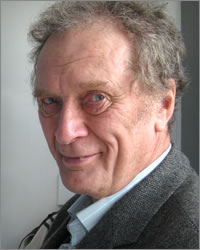
Peter Armstrong’s first degree was in aeronautical engineering. After working for two years on the development of gas turbines, he spent five years with the Central Electricity Generating Board at Berkeley Nuclear Laboratories. During this period he was co-developer of the mathematical model of the plastic behaviour of materials which is now standard in stress analysis computer programmes.
In 1967, he left engineering to take a master’s degree in sociology of science at Bath University. There he met Theo Nichols, with whom he worked on the ‘Chemco’ studies of the organization and consciousness of workers on flow process technologies. For a while thereafter, his career paralleled that of Tom Sharpe’s Wilt. He re-emerged into academic life in 1978 with a study of shop-floor industrial relations in the footwear and electrical component industries. In the course of this work he became interested in tensions within white-collar trade unionism concerning the control functions of many of their members. This developed into the studies of the managerial professions for which he is now best-known.
One of these professions is accountancy, and his more specialized researches in this field eventually led to a professorship of accounting at the University of Sheffield. A close encounter with academic entrepreneurship precipitated a move to Keele where he launched into a series of critical studies of entrepreneurialism. In addition to the aforementioned fields of study, his current research interests include design, aesthetics, applied science and pretty well anything except modern French philosophy.